



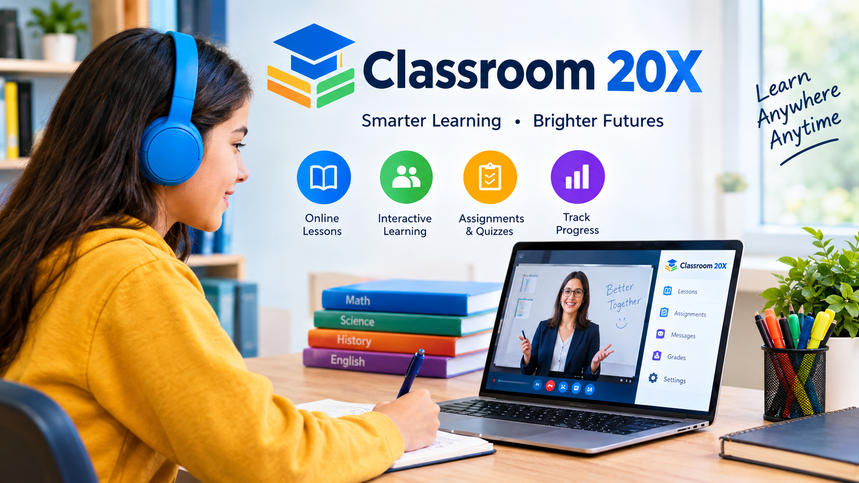
Classroom 20X is associated with modern digital learning and education. Its name reflects a broader shift toward technology-supported classrooms. Students today expect faster access to information. Teachers also need flexible tools for lessons, assignments, and communication.
The idea behind platforms like Classroom 20X is simple. Learning should extend beyond the traditional classroom.
Digital education can connect students with resources at different times. It can also support teachers with organized learning materials. This makes technology increasingly relevant to everyday education.
However, the value of an education platform depends on its actual tools. Content quality matters. Ease of use matters too. Student engagement matters just as much.
For that reason, Classroom 20X deserves attention as part of the growing digital-learning landscape.
Classroom 20X at a Glance
| Category | Details |
|---|---|
| Name | Classroom 20X |
| Type | Digital education / learning platform |
| Main Focus | Online and technology-supported learning |
| Primary Audience | Students, teachers, and education users |
| Core Area | Learning, classroom resources, and educational technology |
| Key Value | Flexible access to educational resources |
Specific ownership, launch dates, and organizational details should be confirmed through official records before publication.
The Idea Behind Classroom 20X
Traditional education follows a familiar model. A teacher presents information. Students listen. Assignments follow. Assessment comes later.
Digital classrooms can change that sequence.
Students may review material before class. They can revisit difficult lessons afterward. Teachers can organize resources in one place. Communication can also become quicker.
This creates a more flexible learning environment.
The “20X” concept also suggests ambition. Modern education platforms often focus on improving productivity and engagement through technology. The goal is not simply to move textbooks online.
Instead, digital learning can combine several elements.
These may include educational content, interactive activities, classroom communication, assessments, and progress tracking. When these pieces work together, students can receive a more connected learning experience.
Still, technology does not automatically improve education.
A poorly designed platform can distract students. Complicated interfaces can create unnecessary barriers. Weak content can reduce the value of otherwise impressive technology.
Classroom 20X therefore fits into a larger conversation about how education technology should work.
How Classroom 20X Fits Into Modern Education
Education has changed significantly with the growth of digital tools.
Students now use smartphones, tablets, computers, and online resources as part of everyday learning. Teachers can also use digital platforms to distribute materials and monitor classroom activities.
This shift became especially visible during periods when schools had to rely heavily on remote learning.
The experience showed both the strengths and weaknesses of online education. Digital platforms offered flexibility. At the same time, they highlighted problems involving access, attention, connectivity, and student motivation.
Classroom 20X belongs to this evolving environment.
A modern learning platform needs to serve several groups at once.
For students, simplicity is essential. They need clear navigation and accessible resources.
For teachers, organization is important. They need practical ways to manage learning materials and student activities.
For institutions, reliability and scalability matter. A platform must work across different users and learning environments.
These requirements explain why education technology continues to develop.
Key Features to Look For
The exact features available through Classroom 20X should always be checked against its current official information. However, users evaluating a digital classroom platform should examine several areas.
- Learning Resources: Quality educational material should remain the foundation.
- Simple Navigation: Students should find lessons without unnecessary steps.
- Interactive Learning: Activities can make passive study more engaging.
- Teacher Support: Educators need practical classroom-management tools.
- Progress Tracking: Useful data can help identify learning gaps.
- Flexible Access: Students benefit when resources work across common devices.
- Communication Tools: Clear interaction can connect teachers and learners.
These features matter because technology should solve problems rather than create new ones.
A platform can have many functions and still feel difficult to use. In education, simplicity often has greater practical value than complexity.
Benefits for Students and Teachers
One major advantage of digital learning is flexibility.
Students can potentially access resources outside normal classroom hours. This can help learners who need additional time with difficult subjects.
Digital resources can also support different learning speeds.
A fast learner may move ahead. Another student may review the same material several times. Traditional classrooms often have limited time for such differences.
Teachers can benefit from centralized resources as well.
Instead of repeatedly distributing the same materials, educators can organize content digitally. This can reduce repetitive administrative work.
Digital platforms may also make communication easier.
Students can ask questions. Teachers can provide resources. Assignments can be organized more efficiently.
Yet these benefits depend on implementation.
Students still need motivation. Teachers still need strong teaching methods. Technology works best when it supports sound educational practice.
Challenges and Limitations
No digital education platform solves every classroom problem.
Internet access remains a major issue in many regions. Not every student has reliable connectivity or a suitable device.
Screen fatigue can create another problem.
Students may spend several hours looking at screens for school, entertainment, and communication. Digital education therefore needs balance.
Privacy is another consideration.
Education platforms can handle student information. Users should understand how personal data is collected, stored, and protected.
Content quality deserves equal attention.
A platform should provide accurate and age-appropriate educational material. Outdated or poorly reviewed content can weaken the learning experience.
These concerns do not make digital education ineffective. They show why users should evaluate platforms carefully.
Classroom 20X and the Future of Learning
The future of education will likely combine physical classrooms with digital resources.
Teachers will continue to provide human guidance. Technology can provide additional flexibility and access.
That combination could become increasingly important.
Artificial intelligence, interactive content, adaptive learning, and automated assessment are already influencing education technology. Future platforms may use these technologies to personalize learning even further.
Classroom 20X represents the type of education concept that fits within this transformation.
Its long-term value will depend on execution.
Strong educational content, accessible design, responsible technology, and genuine student engagement will matter more than branding alone.
For students and teachers, the real question is practical. Does the platform make learning easier, clearer, and more effective?
That is the standard digital education products ultimately need to meet.
What Users Should Consider Before Using It
Before choosing Classroom 20X or any similar platform, users should check several details:
- Check the Source: Verify the platform through official information.
- Review Features: Confirm which tools are actually available.
- Assess Content: Look for accurate and useful educational material.
- Consider Access: Check device and internet requirements.
- Review Privacy: Understand how user information is handled.
- Compare Alternatives: Examine other learning solutions before deciding.
Final Perspective
Classroom 20X fits into the expanding world of digital education. Its significance comes from a larger educational movement toward flexible, technology-supported learning.
The strongest digital classrooms do more than place lessons online. They connect students, teachers, resources, and feedback in useful ways.
As education technology continues to evolve, platforms such as Classroom 20X will face the same challenge. They must turn technology into genuine learning value.
That means usability, educational quality, accessibility, and trust will remain central.
Key Takeaways
- Flexible Learning: Digital tools can extend learning beyond class hours.
- Better Organization: Centralized resources can simplify classroom work.
- Student Engagement: Interactive tools can make learning more active.
- Smart Evaluation: Users should verify features and platform information.
Disclaimer: This article is compiled from publicly available information and general educational-technology context. Specific claims about Classroom 20X, including ownership, launch history, features, awards, or organizational details, should be verified against current official records before publication. This content is intended solely for educational and informational purposes.
Read more: